As an Amazon Associate this site earns from qualifying purchases.
Quick Picks
| Product | Best suited to | Key published spec | Link |
|---|---|---|---|
| WILSON Pickle Pro Women's Pickleball Shoe - White/Cameo Rose | Buyers comparing stated contoured-fit features | Contoured fit follows the shape of the female foot; stable at the midfoot and wider around the toes for the sport's lateral demands [S3] | Check Price on Amazon |
| K-Swiss Women's Court Express Pickleball Shoe | Weekend players replacing a worn-out outsole | AOSTA II high-density non-marking outsole, described by the manufacturer as durable heel-to-toe [S4] | Check Price on Amazon |
| cungel Unisex Tennis Pickleball Badminton Shoes for Men & Women Court Shoes | Players wanting a sole the listing calls all-court | All-court sole pattern the listing says grips on wood, PU or concrete [S5] | Check Price on Amazon |
Disclosure: We earn a small commission from qualifying Amazon purchases at no extra cost to you.
As an Amazon Associate we earn from qualifying purchases. This page contains affiliate links, and we may receive a commission if you buy through them — at no extra cost to you.
As an Amazon Associate, we earn from qualifying purchases.
Last Updated: September 2026
If your pickleball shoes slip on the court, stop play and check both the court conditions and the footwear before trying again. Visible debris, wear, damage or foot movement inside the shoe can be useful observations, but they do not establish the cause on their own. The three product records reviewed here describe shoe features; they contain no troubleshooting tests that can diagnose a slip or guarantee a repair.
Start by recording what happened: whether the outsole moved across the court or your foot moved inside the shoe, the condition of that part of the court, and any visible changes to the shoe. Ask the facility staff about the surface and the manufacturer or a footwear fitter about the shoe as appropriate. Do not use a hard lateral movement as a diagnostic test while slipping remains unexplained.
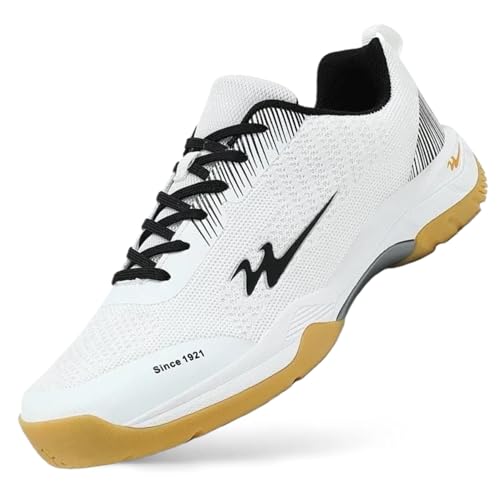
- 3D BREATHABLE MESH UPPER – High-density ventilation holes for rapid sweat dispersion, keeping feet cool and dry during intense matches
- PROFESSIONAL ANTI-SLIP OUTSOLE – Rubber tread pattern tested on badminton courts, ensuring superior grip during quick stops and direction changes
The Problem: Court Conditions, Outsole Condition and Fit
The supplied listings do not establish which cause is most common, how a particular outsole behaves when dirty, or a universal threshold for replacement. These are observations to collect, rather than a diagnosis:
- Court conditions. Note visible dust, grit, water or damage and tell the facility staff. A visual inspection does not measure traction, and cleaning your shoe alone cannot establish that the court is suitable for play.
- Outsole condition. Look for lodged debris, worn areas, splits or separation. Record where they appear. A shiny patch or a difference in tread depth does not, by itself, establish the rubber’s hardness or remaining grip.
- Fit and fastening. Note heel lift or foot movement inside the shoe and check that the closure is used as its manufacturer intends. Tightening laces is not a verified remedy for an unsuitable fit.
- Intended use. Check the exact model’s stated sport, surface and fitting guidance. A category label such as running or pickleball does not establish every shoe’s geometry or suitability for your feet.
Step-by-Step: What to Check Before Cleaning or Returning to Play
- Leave the playing area and inspect the shoe. Make notes or photographs of debris, tread changes, damage and closure condition. Do not repeat the movement that caused the slip as a test.
- Check the court with facility staff. Ask about visible contamination, moisture or damage and follow the facility’s cleaning and footwear requirements.
- Find the exact shoe’s care instructions. None of these three supplied product records specifies a cleaning liquid, brush stiffness, water temperature or drying procedure. This guide therefore cannot prescribe a cleaning method for them.
- Follow the manufacturer’s instructions if cleaning is recommended. Ask the manufacturer if the instructions do not cover the observed condition. Do not assume solvent use, sanding or machine washing is approved.
- Check the manufacturer’s inspection and replacement advice. The listing records provide no minimum tread depth, allowable shine or wear-life limit. Ask how to assess any damage or wear you found.
- Check fit without treating lacing as a cure. Consult the exact model’s fitting guidance or a footwear fitter if your foot moves inside it. A listed contoured fit cannot guarantee a secure fit for every wearer.
- Resolve the cause before returning to play. Cleaning, changing laces or buying a different model is not proof that traction is restored. Keep the court and shoe questions separate and obtain help where they remain unresolved.
Tools and Products You'll Need
Start with the shoe’s actual care instructions and a way to record the condition you observe. Purchase cleaning supplies only after confirming the recommended method. If replacement is appropriate, the three shoes below offer different stated features to compare; none is presented as a guaranteed cure for slipping.
Recommended Products
WILSON Pickle Pro Women's Pickleball Shoe - White/Cameo Rose — Best for a listed contoured fit
Wilson’s listing describes a contoured fit following the shape of the female foot, a plush collar described as securing the ankle, and a stable, cushioned midsole [S3]. These are Wilson’s fit and support claims. They do not establish the cause of slipping in your current shoes or guarantee that this model will prevent foot movement for you.
The function bullet describes the Wilson shoe as stable at the midfoot and wider around the toes, built for the sport’s lateral demands [S3]. The record supplies no numeric width or comparison showing how this shape fits a particular wearer; it does not establish that wider toe space prevents tipping.
Suits: buyers who want to compare Wilson’s stated pickleball-specific fit. Confirm the exact size and fit instead of assuming the sport label settles them.
Worth knowing: the supplied listing information does not state the outsole rubber compound or tread pattern, so the grip surface itself is not described in the record. That is the specification you would most want here, and it is absent.
K-Swiss Women's Court Express Pickleball Shoe — Best for weekend players replacing a worn outsole
K-Swiss speaks directly to outsole longevity for the K-Swiss Women's Court Express Pickleball Shoe: the listing specifies an AOSTA II high-density non-marking rubber compound and describes its durability as heel-to-toe [S4]. Non-marking matters if you play indoors, where marking soles are often barred.
Read the player-level bullet before you buy, because the brand is unusually blunt about it: this model is designed for the entry-level, part-time, weekend player, and K-Swiss points frequent players toward its Express Light and players on court six to seven days a week toward its Pickleball Supreme [S4]. That is a player-level recommendation about intended use frequency, not a statement about how long the outsole lasts.
The midsole uses a K-EVA formula the brand says maximizes cushioning and enhances midsole durability, with a leather upper and an OrthoLite sock liner for perspiration management [S4]. The supplied record includes no airflow comparison with a mesh upper.
Suits: entry-level, part-time, weekend players who wore the tread off a general trainer. K-Swiss points frequent players to a different model, so check the player-level bullet against your own schedule [S4].
cungel Unisex Tennis Pickleball Badminton Shoes for Men & Women Court Shoes — Best for a listing that names multiple court surfaces
Indoor vs outdoor pickleball shoe traction is a real fork, and this listing is the only one in the set that addresses multiple surfaces directly. The all-court bullet says the sole pattern grips on wood, PU or concrete and lists tennis, pickleball and badminton as applications [S5].
The seller describes its rubber tread pattern as tested on badminton courts for grip during quick stops and direction changes [S5]. The record does not name the test surface, protocol, conditions or measured result. That is a seller-reported test claim; the separate wood, PU and concrete claim does not establish performance in the condition where you experienced slipping.
The upper is a 3D breathable mesh with high-density ventilation holes, and the midsole is EVA foam the listing describes as lightweight and cushioned [S5]. Reinforced rubber with high-density material is claimed for wear resistance under repeated jumps and landings [S5].
Suits: players who want a sole pattern the cungel listing says grips on wood, PU or concrete [S5]. As an editorial note rather than anything in the record, carrying outdoor grit onto an indoor floor is worth avoiding, so consider keeping a pair for one setting.
Worth knowing: the supplied listing information does not state the durometer, tread depth or a marking classification, so you cannot confirm from the record whether a given indoor facility will accept it.
Tips for Best Results
- Keep notes about where and when slipping occurs, including the court and the exact shoe model. This helps you give the manufacturer or facility staff concrete information.
- Follow the venue’s rules for clean soles and acceptable footwear before entering an indoor court. A seller’s all-court claim does not replace those rules.
- Use the exact model’s care instructions. The supplied records do not establish that rotating two pairs extends total wear life or that every foam needs the same recovery period.
- Compare surface claims with the court you use. Where the listing supplies no measurement or certification, leave that question open until it is answered.
Common Mistakes to Avoid
- Prescribing a cleaning method from the shoe category alone. These records do not authorize machine washing, solvents, sanding or a particular brush. Check the manufacturer’s instructions.
- Treating shine as a complete diagnosis. A visual change does not by itself establish hardness, remaining traction or whether the material can be restored.
- Checking only the upper. Inspect the outsole, fastening and visible damage as separate observations; one part’s appearance does not establish another’s condition.
- Assuming a sport label guarantees fit or grip. Read the exact model’s details and resolve the specific problem you observed.
- Converting player-level guidance into a wear-life promise. K-Swiss recommends different models for different playing frequencies [S4]. That is intended-use guidance, not a stated replacement interval.
When to Replace Pickleball Court Shoes
The supplied records give no minimum tread depth, calendar interval or visual threshold that establishes when any of these shoes must be replaced. Ask the manufacturer about visible damage, wear or persistent fit problems, and do not keep playing in a shoe that continues to slip while you decide. Replacement may be appropriate, but a new shoe will not by itself resolve an unsuitable court surface.
How We Research
This website does not do product research. For this guide, we pulled each shoe's Amazon Creators API verified product record and read every published listing feature bullet, all retrieved 2026-09-06, then reasoned from what the manufacturers and sellers actually state about outsole compounds, fit geometry and intended player level. Where a listing is silent — tread depth, rubber hardness, warranty — we say so rather than filling the gap.
Related Resources
- Choosing a pickleball paddle
- Setting up a backyard pickleball court
- CPSC consumer product safety information: [S1] https://www.cpsc.gov/
- USA.gov consumer protection: [S2] https://www.usa.gov/consumer-protection
Final Verdict
Stop play and investigate the court, outsole condition and fit separately. The supplied records do not support a universal cleaning prescription, an automatic wear diagnosis or a guaranteed traction fix.
If you are considering replacement after resolving those questions, K-Swiss names an AOSTA II non-marking outsole and positions the Court Express for entry-level, part-time, weekend players [S4]. Wilson describes a contoured fit, plush collar and stable midfoot [S3]. Cungel states an all-court traction claim covering wood, PU and concrete [S5]. These are distinct manufacturer claims to compare, not evidence that any model will correct your particular slipping problem.
Confirm the actual size, fit, venue requirements and relevant care guidance before choosing. The listings leave tread-depth limits, friction measurements and detailed troubleshooting unanswered.
Frequently Asked Questions
The product records here cannot diagnose that. Record the court conditions, visible shoe condition and any movement inside the shoe, and consult the facility or manufacturer as appropriate. Do not assume every slip has the same cause.
How do I clean pickleball shoe soles?
Follow the exact model’s care instructions. The three supplied records do not specify a liquid, brush type, water temperature or drying method, so this guide does not prescribe one.
When should I replace pickleball court shoes?
Ask the manufacturer about observed damage, wear or persistent fit issues. These records supply no universal replacement interval or tread-depth threshold. Pause play while slipping remains unresolved.
Can I compare indoor and outdoor traction from these listings?
Cungel states a sole-pattern claim for wood, PU and concrete [S5], and K-Swiss names a non-marking outsole [S4]. Neither statement is a measured comparison between indoor and outdoor conditions. Follow the venue’s footwear requirements.
Can I use running shoes for pickleball?
Check the exact model’s stated use and fit guidance and your venue’s requirements. These records contain no running-shoe comparison, so they cannot establish a universal answer for that category.
Does a pickleball-specific fit prevent slipping?
Wilson describes a contoured fit, plush collar and a stable midfoot with wider toe space [S3]. Those are stated design features, not a guarantee against internal foot movement or outsole slipping for an individual wearer.
How many days a week is the Court Express intended for?
K-Swiss positions it for entry-level, part-time, weekend players and recommends its Express Light for frequent players and its Pickleball Supreme for six-to-seven-day players [S4]. This is the manufacturer’s intended-use guidance, not a measured wear-life limit.
Sources & Methodology
Nobody at this website wore, flexed, scuffed or lab-rated any of these three shoes — there is no test court and no lab behind this page. What we did was read each shoe's Amazon Creators API verified product record and its full set of published listing feature bullets, retrieved 2026-09-06, and press on the specifics: which outsole compounds are actually named, which listings describe a surface type, and where a manufacturer states an intended play frequency.
For footwear traction, that kind of reading takes you further than you might expect on fit geometry, stated compounds and intended player level, and no further at all on how a compound behaves after a season of outdoor concrete. Treat the outsole and player-level statements as the manufacturers' own claims, use the observations above to seek model-specific guidance, and compare the published features with your surface, fitting requirements and play frequency.