As an Amazon Associate this site earns from qualifying purchases.
Quick Picks: Line-Marking Tape at a Glance
| Product | Stated size | Surfaces named in the listing | Link |
|---|---|---|---|
| Professor Pickleball Court Tape - Makes Full Size Court - Outdoor Pickleball Marking Kit - 2" x 200 FT | 2 in x 200 ft, yellow | Concrete, asphalt, driveways, parking lots | Check Price on Amazon |
| Quick Court Indoor Pickleball Court Marking Tape | 2 in x 230 ft, blue | Hardwood, vinyl, gym floors | Check Price on Amazon |
Disclosure: We earn a small commission from qualifying Amazon purchases at no extra cost to you.
As an Amazon Associate we earn from qualifying purchases. This page contains affiliate links, and we may receive a commission if you buy through them — at no extra cost to you.
As an Amazon Associate, we earn from qualifying purchases.
Last Updated: September 2026
Measure a clear rectangle that includes space beyond the court lines, not just the area you intend to mark. USA Pickleball’s construction guidance distinguishes the 20-by-44-foot marked court from the larger total playing surface [S_USAP]. Quick Court also lists QR-linked setup instructions covering full court dimensions; those linked instructions were not independently inspected for this article. Use the official guidance and the exact equipment instructions together before committing to a layout.
Draw a plan showing the proposed boundaries, all surrounding clearances and fixed obstacles before purchasing line-marking materials. A surface that accommodates the painted rectangle alone does not establish a suitable playing area.
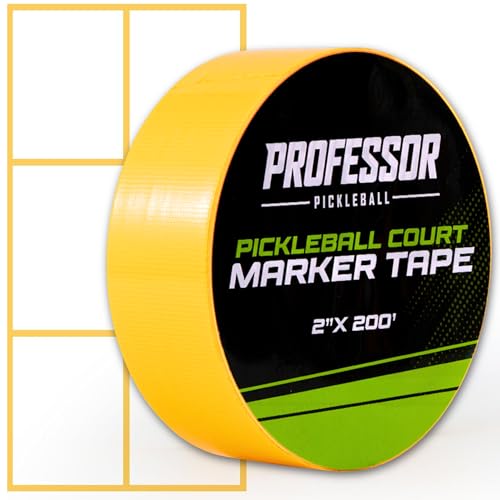
- CREATES A FULL SIZED PICKLEBALL COURT: The Professor Pickleball outdoor pickleball court tape measures 200 feet long and 2 inches wide, providing enough tape to create pickleball
- EASY TO INSTALL COURT LINES: Transform any outdoor space into a pickleball court with ease! Our pickleball lines kit ensures straight, clean lines every time, making court setup
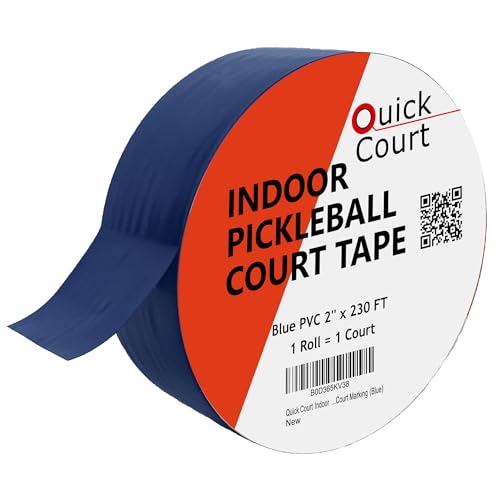
- 1 Roll = 1 Court - Don't waste money or the environment on tape you don't need. Our blue pickle ball tape is long enough to layout a single indoor court with some spare if needed
- Super Easy Setup - Get playing in no time by scanning the included step-by-step instructions. The QR code link takes you straight to easy-to-follow instructions, detailing full
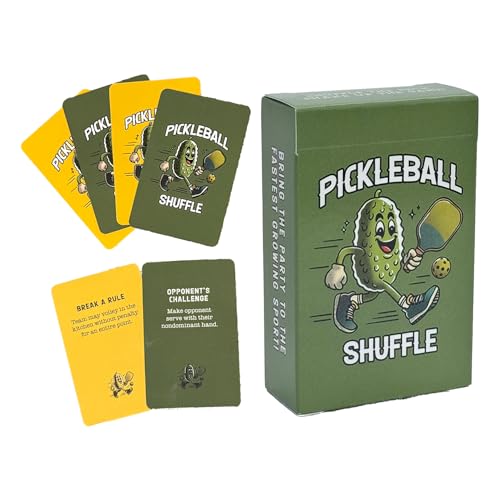
- SHUFFLE THE DECK. SHAKE UP THE GAME! Draw. Play. Shuffle it up. Pick a card, take on the challenge, and keep the game going. Simple to learn, quick to play, and never quite the
- FUN FOR ALL AGES AND SKILL LEVELS: More laughs. More connection. More reasons to play. Perfect for couples, friends, families, clubs, socials, competition and anyone who wants to
The Problem: A Driveway’s Dimensions Do Not Establish Court Suitability
Inspect the actual space for drainage, seams, changes in width and obstructions such as posts, walls, doors and overhanging structures. Their locations matter alongside the rectangle’s dimensions. This guide cannot establish a particular slab’s condition or suitability from a product listing.
So the useful question isn't "does the court fit." It's "does the court plus the space players actually use fit, and what do I give up if it doesn't?"
Step-by-Step: How to Measure Your Space
- Separate the court lines from the whole playing area. Use the 20-by-44-foot marked court boundaries in USA Pickleball’s construction guidance [S_USAP]. Its recommended minimum total playing surface is 30 by 60 feet, with 34 by 64 feet preferred [S_USAP]. Check the current official layout instructions for line placement and the non-volley zone before marking.
- Measure both candidate orientations. Record the usable length and width, including clearances beyond every boundary. Do not assume one direction matters more than the other or choose orientation from length alone.
- Measure the width at the narrowest point, not the widest. Aprons flare. If your driveway pinches near the street, that pinch is your real width.
- Follow a complete rectangular layout method. Mark proposed corners only with a surface-approved temporary method. Check the required side lengths and alignment; a diagonal check is useful alongside those measurements, but equal diagonals alone do not prove a four-sided shape is a rectangle.
- Assess the surface before playing. Record visible slope, drainage issues, cracks and changes in level. The supplied tape records do not establish a slope tolerance or a way to approve a court by playing a trial game. Obtain the relevant site and installation guidance before deciding the surface is suitable.
- Look up. Garage eaves, basketball backboards, and low branches sit inside the volume a lob travels through, even when the ground plan measures fine.
- Review the proposed layout before applying tape. Confirm the full playing area and equipment placement. Use a temporary marking method only where the surface owner permits it, and do not use a trial game as proof of safety.
Run-Off: The Part Nearly Everyone Skips
Run-off is the buffer beyond the baselines and sidelines where players decelerate. It isn't part of the marked court, which is exactly why it disappears from driveway plans — the lines fit, so the job looks done.
Use clearance around the whole court; do not treat sideline space as optional or rank baseline and sideline hazards from these product records. USA Pickleball recommends a minimum total playing surface of 30 by 60 feet and prefers 34 by 64 feet [S_USAP]. Check how the marked court sits within that space and whether any obstruction affects it. Those published dimensions alone do not certify a particular location as safe.
Half-Court and Reduced-Size Setups
If a full layout and its required surrounding space do not fit, consider whether a smaller practice activity can be accommodated with appropriate clearance and equipment instructions. Calling an area a half-court does not establish that it needs exactly half the total space or that an obstructed area is suitable.
A reduced practice layout is different from a regulation doubles court. Choose the specific drill, net size and equipment placement only after assessing the space needed for that activity. Our portable pickleball net comparison describes listed net configurations; it does not validate your site.
Tools and Products You'll Need
A tape measure and a surface-approved layout method help plan boundary lines. The complete equipment and site requirements depend on your intended setup; line-marking tools alone do not make a complete court.
Professor Pickleball Court Tape - Makes Full Size Court - Outdoor Pickleball Marking Kit - 2" x 200 FT — Best for driveways and other outdoor slabs
This is the pick for a driveway specifically because of one published figure: Professor Pickleball lists its outdoor tape at 200 feet long and 2 inches wide, and says that is enough to create the lines for an entire outdoor court. That is the seller’s coverage claim. Confirm the layout, installation instructions and allowance for waste or rework before deciding how many rolls to order.
The listing describes it as weather-resistant, designed for driveways, parking lots, concrete and asphalt, and it says the tape peels off without leaving a sticky mess behind. Reading that closely: the Professor Pickleball listing says nothing about surplus beyond a full court, so confirm the quantity and any needed allowance for rework. Plan with an approved temporary marking method before applying adhesive tape.
Quick Court Indoor Pickleball Court Marking Tape — Best for gym floors and indoor hard surfaces
Quick Court sells its indoor tape as a 2-inch by 230-foot blue roll and states that one roll lays out a single indoor court with some spare if needed. The listing does not say how much spare that is or what it covers, so confirm the layout and quantity needed, including any allowance for rework, before ordering.
Quick Court's listing says the tape adheres to hardwood, vinyl and gym floors, peels away with zero residue on a surface cleared of dust and debris, and can also be used for basketball, tennis or badminton. It also ships with a QR code that the listing says links to step-by-step instructions detailing full USAPA court dimensions and the other equipment required ; the QR-linked instructions were not independently reviewed here. The listing also describes temporary or permanent court marking, without supplying an installation duration or complete removal conditions. The limitation that matters for this article: the supplied listing information names indoor surfaces only and does not state performance on concrete or asphalt, so confirm suitability directly before considering it for those surfaces. The absence of a stated outdoor specification is not proof that it fails there.
Pickleball Shuffle (seller's full title: "Pickleball Shuffle | The Best On-Court Pickleball Card Game for Friends...") — For social play once the court is marked
Be clear about what this is: a card game played during a traditional pickleball game, not a court-setup tool. It won't help you measure anything. ("The Best" is the seller's own product name, not a ranking from this website.)
Each box contains two decks, each holding 24 action cards, with one deck intended per court. The seller describes it as suitable for players from beginners to pros, ages 10 to 100. For a group interested in a card-based variation on play, the Pickleball Shuffle deck (ASIN B0DMPF71P5), which its listing describes as specialized cards full of unpredictable moves to use during a traditional pickleball game, may be an optional activity to consider. The seller’s fun and skill-level claims do not establish a measured outcome or affect the court’s space requirements.
Tips for Best Results
- Sweep and dry the surface completely before taping. Quick Court explicitly conditions its zero-residue removal on a surface free of dust and debris.
- Use a suitable straight-line layout method and verify alignment before applying tape; obtain approval before using chalk or adhesive on a finished surface.
- Follow the official layout and product instructions for line placement. Confirm the full plan before making a change that requires replacement tape.
- Obtain the maker’s storage-temperature and storage-condition guidance. Professor Pickleball states weather resistance and outdoor durability; those use claims do not specify storage limits or thermal-cycling results for a garage.
Common Mistakes to Avoid
- Measuring the widest part of the driveway instead of the narrowest.
- Ignoring vertical obstructions because the floor plan measures fine.
- Buying tape before dry-fitting, then discovering the rectangle needs to shift.
- Treating the marked lines as the total space requirement and leaving no run-off.
- Assuming an indoor-rated tape will behave the same on asphalt when the listing doesn't say so.
How We Research
This website does not do product research. For this page, we read the Amazon Creators API verified product record and the product listing feature bullets for each of the three products above, all retrieved on September 6, 2026, and compared what each manufacturer actually publishes about roll length, width, named surfaces and removal behavior. We distinguish stated features from missing details: Quick Court lists QR-linked court instructions and indoor surfaces, while Professor Pickleball makes outdoor and weather-resistance claims. Neither record supplies storage-temperature limits or a site-suitability assessment. The CPSC publishes consumer product recalls and safety notices, which is worth a look before any outdoor purchase.
Related Resources
- Court surface questions when choosing pickleball shoes
- Pickleball paddle buying guide
- Portable pickleball net comparison
Final Verdict
For a driveway or a yard slab, the Professor Pickleball Court Tape - Makes Full Size Court - Outdoor Pickleball Marking Kit - 2" x 200 FT is the straightforward choice, because its listing names concrete, asphalt, driveways and parking lots as intended surfaces and describes the tape as weather-resistant. Confirm the complete playing area, surface permission and installation requirements before purchasing for a planned court.
If your space is an indoor floor of the kind its listing names — hardwood, vinyl or gym flooring — the Quick Court Indoor Pickleball Court Marking Tape is the better match on stated surfaces; its listing describes the 230-foot roll as enough for a single indoor court with some spare if needed, without saying how much.
If the full layout and surrounding clearances do not fit, reconsider the intended activity and assess a smaller practice setup on its own requirements. A half-court label or a clean-looking set of lines does not by itself resolve insufficient space or obstructions.
Frequently Asked Questions
How much tape does a full court take? Professor Pickleball lists its outdoor tape at 200 feet long and 2 inches wide, and says that is enough to create the lines for an entire outdoor court. Quick Court sells its indoor tape as a 2-inch by 230-foot blue roll and states that one roll lays out a single indoor court with some spare if needed.
Where should I check the net dimensions? USA Pickleball specifies 36 inches at the sidelines and 34 inches at the center for net height [S_USAP]. Verify the current official requirements for the complete net and its installation, then compare the exact net system’s listed dimensions. These tape records do not supply a net system’s width; Quick Court’s QR-linked instructions are a separate included resource.
Will court tape damage my concrete or my gym floor? Both listings claim residue-free removal. Quick Court's listing says the tape peels away with zero residue provided the surface was cleared of dust and debris first, and Professor Pickleball's says its tape peels off without leaving a sticky mess behind. Neither record states results on sealed, painted or decorative coatings.
Can I use indoor tape outdoors? The supplied Quick Court listing names hardwood, vinyl and gym floors and does not address concrete, asphalt or weather exposure. That silence does not establish failure outdoors. Professor Pickleball explicitly lists concrete and asphalt use, but confirm the exact product’s suitability and removal requirements for your surface before applying either tape.
Is a half-court worth marking? A smaller layout may be relevant to a defined practice activity, but confirm its needed clearances, net dimensions and equipment instructions. Do not assume it requires exactly half a full court’s total playing area or that every drill will fit.
What if the tape arrives damaged or isn't as described? USA.gov's consumer protection pages cover how to handle a purchase that arrives damaged or not as described.
Sources and Methodology
Nothing on this page was measured, timed or installed on a driveway by this website. We read the three products’ Amazon Creators API records and listing bullets retrieved on September 6, 2026. The two tape records support comparisons of stated roll sizes, intended surfaces, coverage and removal claims; the card-game record describes an optional activity. For court planning, the cited USA Pickleball construction guidance supplies the distinction between marked boundaries and total playing surface, plus net-height guidance [S_USAP]. These sources do not provide an assessment of your individual site, coating or installation.
Court dimensions reference
[S_USAP] USA Pickleball court construction guidance, accessed September 7, 2026, distinguishes marked court dimensions from the total playing surface and specifies sideline and center net heights.